For women 62 and older, and the advisors who serve them

Reverse mortgages, explained for women planning their retirement

Women tend to live longer, often manage money alone at some point, and usually hold much of their wealth in their home. Two Certified Reverse Mortgage Professionals show how home equity can be a planned part of retirement, not a last resort.

Education first. No pressure, and no obligation to apply.

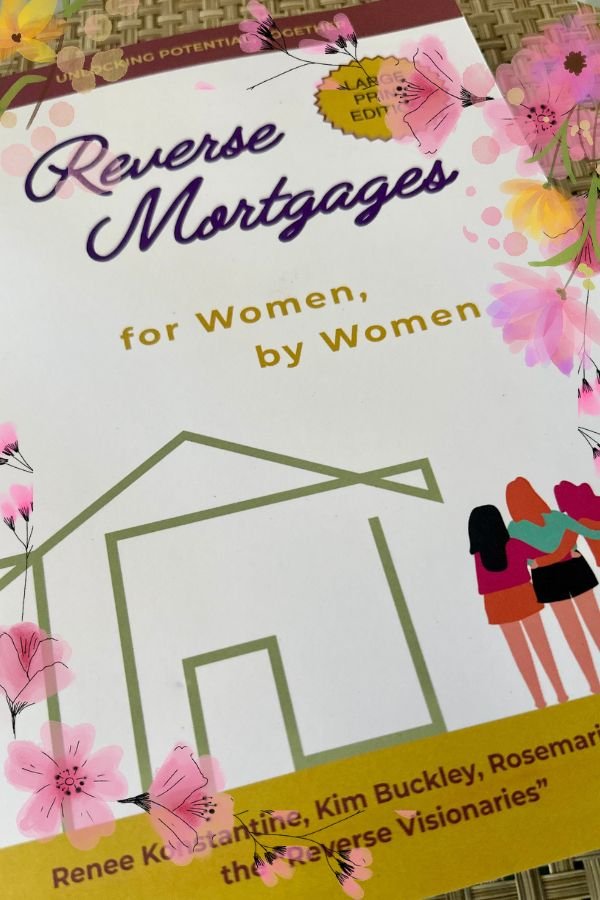
Cover of Reverse Mortgages for Women, by Women, by Renee Konstantine and Kimberly Buckley

Why retirement planning looks different for women

Most retirement advice assumes a two-income couple with a pension and a long, unbroken career. Many women's lives don't follow that script, and their plans shouldn't either.

For a lot of women, the home is the largest asset they own. Used carefully, a reverse mortgage can turn part of that equity into income, a safety net, or a way to stay in a home they love, while they keep ownership.

  • Savings have to last longerWomen live longer than men on average, so the same nest egg has to stretch over more years.
  • Many will manage money aloneAfter widowhood or divorce, decisions that were shared become hers to make, often quickly.
  • Caregiving years add upTime away from paid work to raise children or care for parents can mean smaller Social Security benefits and retirement accounts.

Situations we help women think through

Every case is different. These are the questions we hear most often.

After losing a spouse

Household income often drops when one Social Security check stops, while the mortgage, taxes, and bills stay the same. A reverse mortgage can remove a mortgage payment or add a reserve, so you don't have to make a rushed decision about the house.

Divorce later in life

When one spouse wants to keep the home, a reverse mortgage can sometimes pay off the existing loan so she can stay without a monthly mortgage payment. We work alongside your attorney and financial planner on the timing.

Downsizing or moving closer to family

With HECM for Purchase, you can buy your next home with a down payment and no monthly mortgage payment, which keeps more of your sale proceeds invested or in savings. How HECM for Purchase works.

Married to a younger spouse

If your spouse is under 62, eligible non-borrowing spouse protections can let them stay in the home if you pass away first. How the loan is set up at closing matters, so plan it in advance.

A standby line of credit

A HECM line of credit you don't use grows over time. Many planners treat it as a reserve to draw on in down markets, instead of selling investments at a loss. How the line of credit grows.

Staying in the home you love

Paying off a remaining mortgage, funding repairs or accessibility updates, or covering in-home care can make aging in place realistic and affordable.
How the process works

  1. Learn

    A no-obligation conversation about your goals, your home, and whether a reverse mortgage fits at all.

  2. Counseling

    You meet with an independent HUD-approved counselor. This is required for a HECM and protects you.

  3. Application

    An appraisal and a financial assessment confirm you can keep up with taxes, insurance, and upkeep.

  4. Closing

    You sign, any existing mortgage is paid off, and you choose how to receive funds. Refinances include a three-day right to cancel.

Inside Reverse Mortgages for Women, by Women

A plain-language guide to reverse mortgages as a retirement planning tool, written for women and the people who advise them.

Get the book on Amazon

Buying copies for clients, a seminar, or a library? Ask about bulk pricing.

  • How reverse mortgages work and who qualifies
  • HECM, HECM for Purchase, and private jumbo programs compared
  • Costs and fees, and how to read a loan estimate
  • Effects on taxes and government benefits
  • Planning around widowhood, divorce, and downsizing
  • Common myths, and what's actually true
  • Real-world case studies

About the authors

Together the authors write as The Reverse Visionaries and have published several books on reverse mortgages.

Renee Konstantine, CRMP

NMLS #1360025, CA DRE #01343046

Renee is an Associate Broker at C2 Financial Corporation in San Diego. She has more than 20 years in mortgage lending and over 15 focused on reverse mortgages, including HECM, HECM for Purchase, and jumbo programs. She serves on the NRMLA Education Committee and created the CRMS™ and C-R4P™ professional designations through ReverseMortgageEDU™. She is licensed in California and Washington.

Kimberly Buckley, CRMP

NMLS #241393

Kimberly is a Certified Reverse Mortgage Professional who specializes in reverse mortgage strategy and retirement planning, with a commitment to helping women make informed, confident financial decisions.

For financial planners and CFP® professionals

Your client stays your client. We handle the reverse mortgage, keep you informed at each step, and explain options in planning terms, not sales terms.

Start a referral conversation
  • Case reviews before your client meets with anyone
  • Standby line-of-credit and sequence-of-returns strategies
  • HECM for Purchase for clients who are relocating
  • Status updates from application through closing
  • Copies of the book for your client library

Frequently asked questions

What is a reverse mortgage?

A reverse mortgage lets homeowners convert part of their home equity into cash without a required monthly mortgage payment. The federally insured version, the HECM, is for homeowners 62 and older. The loan comes due when the last borrower sells, moves out permanently, or passes away. You still pay property taxes, homeowners insurance, and upkeep.

How much can I borrow with a reverse mortgage?

It depends on the age of the youngest borrower or eligible non-borrowing spouse, your home's value up to the FHA lending limit, and current interest rates. Older borrowers and lower rates generally mean a larger amount. The free HECM calculator gives a quick estimate.

What does a reverse mortgage cost?

Typical costs include an origination fee, third-party closing costs such as appraisal and title, and FHA mortgage insurance (an upfront premium plus an annual premium). Most costs can be financed into the loan. Compare written estimates and ask what each fee covers.

Do I still own my home with a reverse mortgage?

Yes. The title stays in your name. The lender holds a lien, as with any mortgage, and you stay responsible for taxes, insurance, and maintenance.

Can I leave my home to my heirs?

Yes. Your heirs can sell the home and keep any remaining equity, or keep the home by paying off the loan. A HECM is non-recourse: if the balance is more than the home is worth, heirs who want to keep it can pay the lesser of the balance or 95% of the appraised value, and they never owe the difference. See the full timeline for heirs.

Does a reverse mortgage affect Social Security or Medicare?

No. Reverse mortgage proceeds are loan funds, not income, so they don't affect Social Security or Medicare. Needs-based programs such as Medicaid and SSI can be affected if you hold the funds past the month you receive them, so check with a benefits specialist first.

Do I need to pay off my current mortgage first?

No. An existing mortgage is paid off at closing with reverse mortgage proceeds, which often removes the monthly payment entirely.

Is counseling required?

Yes. Before applying for a HECM you meet with an independent, HUD-approved counselor. It is a required consumer protection and a good chance to ask questions with no one selling you anything.

What if my spouse is younger than 62?

A younger spouse can often be listed as an eligible non-borrowing spouse. If the conditions are met, she or he can stay in the home after the borrowing spouse dies, though no further funds can be drawn. How this is set up at closing matters, so ask about it early.

Reviewed by Renee Konstantine, CRMP, NMLS #1360025. Last updated October 2026.

Have a question that isn't here? Browse plain-language answers at WikiReverseMortgage.com.

Ask us a question

Whether you're just curious or ready to talk numbers, we'll give you a straight answer. Advisors and family members are welcome to reach out too.

Based in
San Diego County, California